

📖 This recipe is in the book
The Imported Kitchen — every Takeout Kit classic plus my travel favorites: 22 recipes with the exact imported brands that make them taste real.
Get the Cookbook — $9.99 →This spaetzle and sausage recipe is German comfort food: chewy egg dumplings browned in butter, sliced bratwurst, and tangy sauerkraut. It’s the kind of plate you’d get at a biergarten, made at home.
I haven’t made it to Germany yet (my husband has and won’t stop talking about it), but I’ve eaten my way through Vienna and explored every German restaurant I could find in the U.S. When I decided to develop this recipe, I worked with a chef and went a little obsessive on the research - especially on the spaetzle press and the technique for getting that perfect chewy, irregular texture that makes handmade spaetzle so different from dried pasta. After dozens of taste-tests and way too many batches of dough, this is the version that finally tastes like the biergarten spaetzle I’ve been chasing.
Build Your Own Oktoberfest Kit
Craving the Biergarten experience but can’t fly to Munich? Here are the exact authentic staples we recommend to get that proper “chewy” texture and tangy bite at home.
-
🍜 Bechtle Traditional German Spätzle
Why this brand: Many dried brands turn to mush. Bechtle (from Swabia) holds its shape perfectly when you sauté it in butter for that crispy finish. -
🥨 Löwensenf Extra Hot Mustard
The real deal: American yellow mustard is too vinegary for this. Löwensenf gives you that serious horseradish-like heat that cuts through the rich sausage. -
🥬 Hengstenberg Bavarian Sauerkraut
Mild & crisp: Unlike harsh canned varieties, this Bavarian style is often infused with white wine, making it mellower and perfect for warming up in the pan. -
👨🍳 Stainless Steel Spätzle Maker
Feeling ambitious? If you want to make the noodles from scratch (flour & eggs), this simple slider tool is 100x easier than the colander method. - 🥄 Hiware Solid Stainless Steel Spider Strainer
Lifts noodles, dumplings and fried bits out of boiling water or hot oil without draining the pot. - 🌡️ ThermoPro TP19H Instant-Read Meat Thermometer
A reading in about a second, so sausage, chicken and pork are cooked through without guessing. - 🥘 Cook N Home 8-Quart Stainless Steel Stockpot
Big enough for noodles, broth or a full pot of salted water without boiling over. - 🥄 Stainless Steel Spaetzle Maker
Press the batter through the holes straight into simmering water for even, tender dumplings.
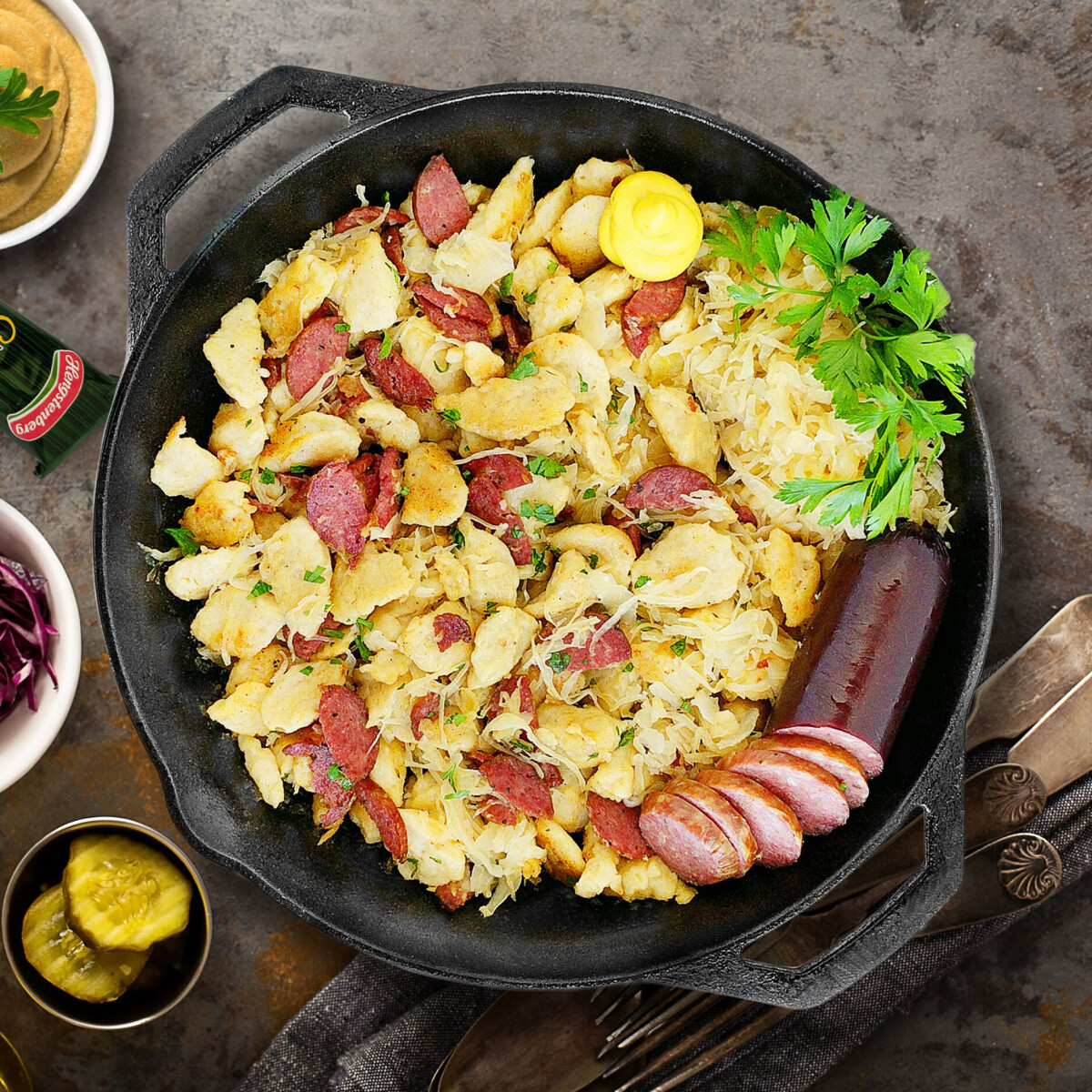
Sausage and spaetzle with sauerkraut is everyday food in southern Germany and a fixture at Oktoberfest.
If you’re obsessed with spaetzle as much as we are, make sure to check out our cheesy spaetzle recipe. Feeding a crowd? This recipe pairs nicely with Hungarian goulash too.
Jump to:
What ingredients do you need for spaetzle and sausage?
You only need a handful of ingredients for this spaetzle and sausage recipe:

- Dry spaetzle noodles
- Bratwurst sausages (or vegan brats)
- Sauerkraut
- German mustard (senf)
- Butter or cooking oil
- Fresh parsley (optional, for garnish)
- Salt (for boiling spaetzle)
See recipe card for quantities.
How do you cook spaetzle with bratwurst?

- Step 1: Bring 4 quarts of salted water to a boil in a large saucepan. Add the spaetzle noodles and cook according to package directions.

- Step 2: Drain the spaetzle in a colander and rinse with cold water to remove excess starch. Shake off any excess water and pat dry if necessary.

- Step 3: In a large skillet over medium-high heat, sauté the bratwurst sausages for 2-3 minutes or until cooked through. Slice them into ¼-inch medallions and set aside.

- Step 4: In the same pan, heat butter or cooking oil over medium-high heat. Add the cooked spaetzle, toss to coat, and sauté for 3-5 minutes until golden brown. Combine the sautéed spaetzle and sausage to complete the dish.
Hint: Add a splash of beer to the pan when sautéing the spaetzle and sausage. It gives the dish a malty note.
Tips
Make sure the spaetzle is completely dry before sautéing, or it won’t get a crispy, golden outside. Don’t overcrowd the pan, either. Cook in batches if necessary so everything browns evenly.
Substitutions
Here are some substitutions to accommodate dietary preferences or ingredient availability:
- Sausage – Use vegan bratwurst or smoked tofu to make this dish vegetarian.
- Spaetzle - Use gluten-free spaetzle for a gluten-free option, or egg noodles if you can’t find spaetzle.
- Sauerkraut – If you’re not a fan of sauerkraut, try using sautéed cabbage or skip it altogether.
Variations
- Cheesy – Sprinkle grated Swiss or Gruyère cheese over the spaetzle while sautéing.
- Spicy – Add red chili flakes or use spicy sausages to give the dish a kick.
- Vegetable Boost – Incorporate sautéed mushrooms, onions, or bell peppers for added nutrients.
Do you need special equipment to make spaetzle?
Here’s what you’ll need:
– Large saucepan
– Colander
– Large skillet
– Wooden spoon or spatula
– Chef’s knife
– Cutting board
If you prefer to make homemade spaetzle, you’ll need a spaetzle maker or a colander with large holes. Check out my recommended kitchen tools to purchase the equipment for making spaetzle and sausage recipes. This video walks you through how to make your own homemade spaetzle.
How do you store leftover spaetzle and sausage?
Store leftovers in an airtight container in the refrigerator for up to 3 days. Reheat in a skillet over medium heat until warmed through. This dish doesn’t freeze well due to the texture of the spaetzle.
For best results, enjoy spaetzle and sausage fresh from the pan.
FAQ
Spaetzle and sausage is a traditional German dish combining egg noodle dumplings called spaetzle with sausages, often served with sauerkraut and mustard.
Spaetzle is traditionally served alongside hearty meat dishes in German, Austrian, and Swiss cuisine. Common accompaniments include:
Roast Meats: Spaetzle pairs well with roasted meats like beef rouladen, pork roast (Schweinebraten), or roasted chicken, often drizzled with rich gravy.
Sausages: Varieties such as bratwurst, knackwurst, or weisswurst are popular, usually accompanied by sauerkraut or red cabbage.
Goulash: This flavorful beef stew complements the mild taste of spaetzle.
Lentils: In the Swabian dish Linsen mit Spätzle, spaetzle is served with lentils and smoked sausage.
Käsespätzle: A beloved version where spaetzle is layered with melted cheese and topped with crispy fried onions, similar to macaroni and cheese.
Mushroom Sauces: Creamy mushroom gravies enhance the texture and flavor of spaetzle.
Vegetables: Braised cabbage, caramelized onions, or steamed greens can accompany spaetzle for a lighter meal.
These traditional pairings highlight spaetzle’s versatility and its role as a comforting side dish in Central European cuisine.
The word “Spätzle” comes from the Swabian dialect of German, where it’s the diminutive form of “Spatz,” meaning “sparrow.” So, “Spätzle” literally translates to “little sparrows.” This name is believed to describe the shape of the noodles, which can resemble small sparrows or little lumps when cooked.
Spätzle are traditional soft egg noodles or dumplings popular in Southern Germany, especially in the Swabian region. The term reflects both the culinary heritage and regional linguistic variations within Germany.
Spaetzle and pasta are both noodle-like dishes but have distinct differences:
Ingredients:
Spaetzle: Made from a batter of all-purpose flour, eggs, salt, and water or milk.
Pasta: Typically made from durum wheat semolina and water; eggs are added in some varieties.
Preparation:
Spaetzle: Batter is soft and sticky, pressed through a spaetzle maker or colander into boiling water, forming small dumplings.
Pasta: Dough is firm, kneaded, rolled out, and cut into various shapes before cooking.
Texture and Shape:
Spaetzle: Has a soft, chewy texture with irregular shapes.
Pasta: Comes in numerous uniform shapes with a firmer texture when cooked al dente.
Origin:
Spaetzle: Originates from Germany (Swabian region) and is common in Central European cuisine.
Pasta: Originates from Italy and is a staple of Italian cuisine.
Summary:
Spaetzle is a German egg noodle or dumpling with a unique, soft texture and irregular shape, made from a simple batter. Pasta is an Italian staple made from a firmer dough, shaped into various forms, and has a different texture and preparation method. The key differences lie in their ingredients, preparation techniques, textures, and cultural origins.
Yes, homemade spaetzle can be used and adds an authentic touch to the dish. You’ll need a spaetzle maker or colander to form the noodles.
Bratwurst is the traditional choice, but you can use any German sausage like knackwurst or even a vegan alternative.
Related
Looking for other recipes like this? Try these:


What goes well with spaetzle and sausage?
These are my favorite dishes to serve with spaetzle and sausage: roasted vegetables and potato salad.

More cozy European dishes: For a cheesy vegetarian version, try my Käsespätzle (cheese spaetzle) recipe. For a bigger dinner spread, serve this alongside my Instant Pot Hungarian goulash or cream cheese mashed potatoes.

German Biergarten Spätzle Recipe
Equipment
- 1 Colander
Ingredients
Instructions
Cook the Spaetzle:
- In a large saucepan, bring 4 quarts of salted water to a boil.
- Stir in the spaetzle and continue to boil, uncovered, according to package directions.
- Continue with the recipe while the spaetzle cooks…
Prep the Ingredients:
- Open the sauerkraut pouch and drain. Set aside.
Drain the Spaetzle:
- Drain and rinse starch off the spätzle in a colander. Shake off any excess water. Note: spätzle should be completely dry for the next step; pat dry with a paper towel, if needed.
Sauté Sausage & Spaetzle:
- Sauté the sausage in a large skillet on medium-high for 2-3 minutes (or until cooked if using your own sausage). Slice into ¼ inch medallions and set aside.
- Heat the butter/cooking oil in the same pan over medium-high. Add the cooked spaetzle, toss to coat, and cook for 3-5 minutes until golden brown (tip: for smaller pans, separate into 2 batches). Note: no need to stir constantly; enjoy your beverage instead!
Add Sauerkraut & Sausage:
- Add half of the sauerkraut and the sautéed sausage and cook for another 2 minutes to combine and warm.
Plate & Enjoy!
- Divide between plates and enjoy with the rest of the sauerkraut, mustard, and an (optional) Oktoberfest-style beer or apple cider.
- Optional: garnish with fresh parsley. Dinner music playlist "Oktoberfest" by Spotify.
- Guten Appetit!
Video
Notes

Get the Cookbook
Every Takeout Kit recipe — in one book
22 authentic recipes across 6 regions, each with the exact imported brands that make them taste real. Instant PDF, free updates forever.